

Key Takeaways
- Crawl space waterproofing controls liquid water, ground moisture, and humidity under the home.
- Standing water, damp soil, mold conditions, musty odors, pest activity, and sagging floors should be traced to the source before repairs begin.
- Vapor barriers, sump pumps, drains, dehumidifiers, and encapsulation each solve a different part of the moisture problem.
- Homes in North Carolina, South Carolina, and Georgia need a local plan because humid summers, heavy rain, coastal moisture, low lots, and clay-heavy soils change how crawl spaces behave.
Crawl space waterproofing means controlling water, ground moisture, and humidity so the space below your home stays drier and cleaner. It also helps protect the floor system above it. If you’ve found puddles, a musty smell, mold conditions, damp insulation, or sagging floors, the repair should start with one question: Where is the moisture coming from?
A wet crawl space rarely needs a single product to fix the issue. Standing water may call for drainage and a sump pump. Damp soil may need a sealed vapor barrier. A humid crawl space may need air sealing and a dehumidifier once water entry has been handled. Many homes need a combination because water can enter from the outside, rise from the ground, and move through humid air simultaneously.
CNT Foundations approaches crawl space waterproofing with that order in mind. If the issue is simple, we’ll say so. If the crawl space needs a more extensive repair plan, we’ll explain what we found, why it matters, and which repairs should be done first.
What Is Crawl Space Waterproofing?
Crawl space waterproofing is the work done to keep water out, collect water that gets in, reduce ground moisture, and manage humidity after the main water source has been addressed. Building science guidance treats crawl spaces much like small basements: they need ground vapor control, air sealing, insulation where appropriate, drainage where site conditions require it, and humidity control when the climate calls for it.
A crawl space can have bulk water and water vapor at the same time. Bulk water is visible. You may see puddles, wet foundation walls, seepage after storms, or water collecting at low spots. Water vapor is easier to miss. It rises from exposed soil, moves with humid air, and can condense on cooler surfaces such as ductwork, pipes, masonry, and wood framing.
Start with the source. If water is moving toward the foundation from outside runoff, the repair may begin with grade and discharge corrections. If groundwater is collecting below the home, the crawl space may need an interior drain and a sump system. If the space is dry but humid, sealing and a dehumidifier may be part of the plan. A vapor barrier helps control ground moisture, although it should never be treated as the fix for active flooding.
Crawl Space Waterproofing Is a System
A complete crawl space waterproofing plan may include exterior-grade corrections, roof water discharge improvements, interior drainage, a sump pump, a vapor barrier, sealed seams, wall liners, air sealing, dehumidification, and repair of moisture-damaged wood. The right mix depends on what the inspection finds under the home.
Product-first recommendations can send homeowners in the wrong direction. A liner placed over wet soil may make the area look cleaner for a short time, while water still collects beneath it or seeps around the edges. A dehumidifier can reduce humidity, but it won’t help drain standing water. A sump pump can remove collected water, but it won’t seal air leaks or stop vapor rising from exposed soil.
A good system follows a practical order. Bulk water is stopped or managed first. Drainage and damaged materials are handled next. Vapor and air pathways are sealed after the space is prepared. Humidity control comes last, so the crawl space has a better chance of staying stable through humid weather.
The Difference Between Waterproofing, Encapsulation, and Moisture Control
Homeowners often use the terms waterproofing, encapsulation, and moisture control interchangeably. They overlap, but each one does a different job.
| Term | What It Means | Best For | Limitation |
| Waterproofing | Managing water entering or threatening to enter the crawl space. | Standing water, seepage, wet walls, and drainage problems. | Humidity control may still be needed after water is managed. |
| Vapor barrier | A ground or wall liner that reduces moisture vapor from soil. | Damp soil, ground vapor, and cleaner crawl space conditions. | It cannot solve active flooding on its own. |
| Encapsulation | Sealing the crawl space from soil and outside air as part of a broader moisture plan. | Humidity, odors, comfort concerns, and steady moisture control. | Bulk water should be handled first. |
| Dehumidification | Mechanical control of relative humidity. | Humid climates, musty odors, and the risk of condensation. | It won’t repair drainage problems or groundwater entry. |
There is also an important distinction between a vapor barrier and an air barrier. A vapor barrier slows vapor diffusion. An air barrier controls moving air, which can carry moisture. In a humid Southeast crawl space, both concerns may need attention.
Why Crawl Space Water Problems Should Be Addressed Early
A wet crawl space affects more than just the area under the house. Moisture can change how wood framing performs, how insulation holds up, how the home smells, and how much repair work may be needed later.
Many crawl spaces are connected to the living area through small gaps around floors, penetrations, ductwork, and framing. Once humid or musty air moves through those gaps, the issue may be noticeable in the rooms above. That’s why crawl space odor can appear indoors even when the water problem is below the floor.
The point is practical, not alarmist: Catch moisture while it’s still a moisture issue. Once wood decay, insulation damage, or floor movement enters the picture, the repair becomes that much more involved.
Wood Rot and Floor Framing Damage
Wood can handle normal short-term changes in humidity. Prolonged moisture is different. Joists, beams, subflooring, and support components can soften over time, especially when the same damp conditions repeat after every rainy season.
Homeowners may notice bouncy or sagging floors, uneven rooms, or gaps in trim before they see the crawl space damage itself. If framing has already weakened, waterproofing alone will leave part of the problem unresolved. The moisture source still needs correction, and the damaged support system needs a professional evaluation.
CNT Foundations considers crawl space and foundation repair together when the symptoms point beyond basic moisture control. That prevents a water repair from being separated from the structural issue it helped create.
Mold, Musty Odors, and Indoor Air Concerns
Damp crawl spaces can create conditions where mold and mildew are more likely to grow. Often, the first sign is smell. Musty air can move through gaps around plumbing, wiring, ducts, and floor framing, then show up inside the home.
The safer repair path is simple enough: find the moisture source, remove contaminated or damaged materials when needed, and keep the crawl space drier after repairs. Odor treatments may help for a moment, but they won’t correct the wet conditions that caused the smell.
Pest Activity and Insulation Damage
A damp crawl space is more attractive to pests because it can provide access, shelter, and softened materials. Rodent activity, insects, nesting material, and damaged insulation may indicate a moisture issue that pest control alone may not address.
Falling insulation is another common clue. Once insulation absorbs moisture, it can sag and pull away from the floor system. The rooms above may feel less comfortable, and the crawl space becomes harder to manage because damaged insulation can hold moisture against the structure.
Higher Energy Use and Comfort Problems
Air sealing and insulating basement and crawlspace areas can improve comfort and performance when the work is done correctly. In daily life, homeowners may notice cold floors, damp rooms, uneven temperatures, or a heating and cooling system that seems to run more than expected.
Moisture control gives insulation and air sealing a better chance to work. If the crawl space remains wet, new insulation may become another damaged material under the house.
Common Signs You Need Crawl Space Waterproofing
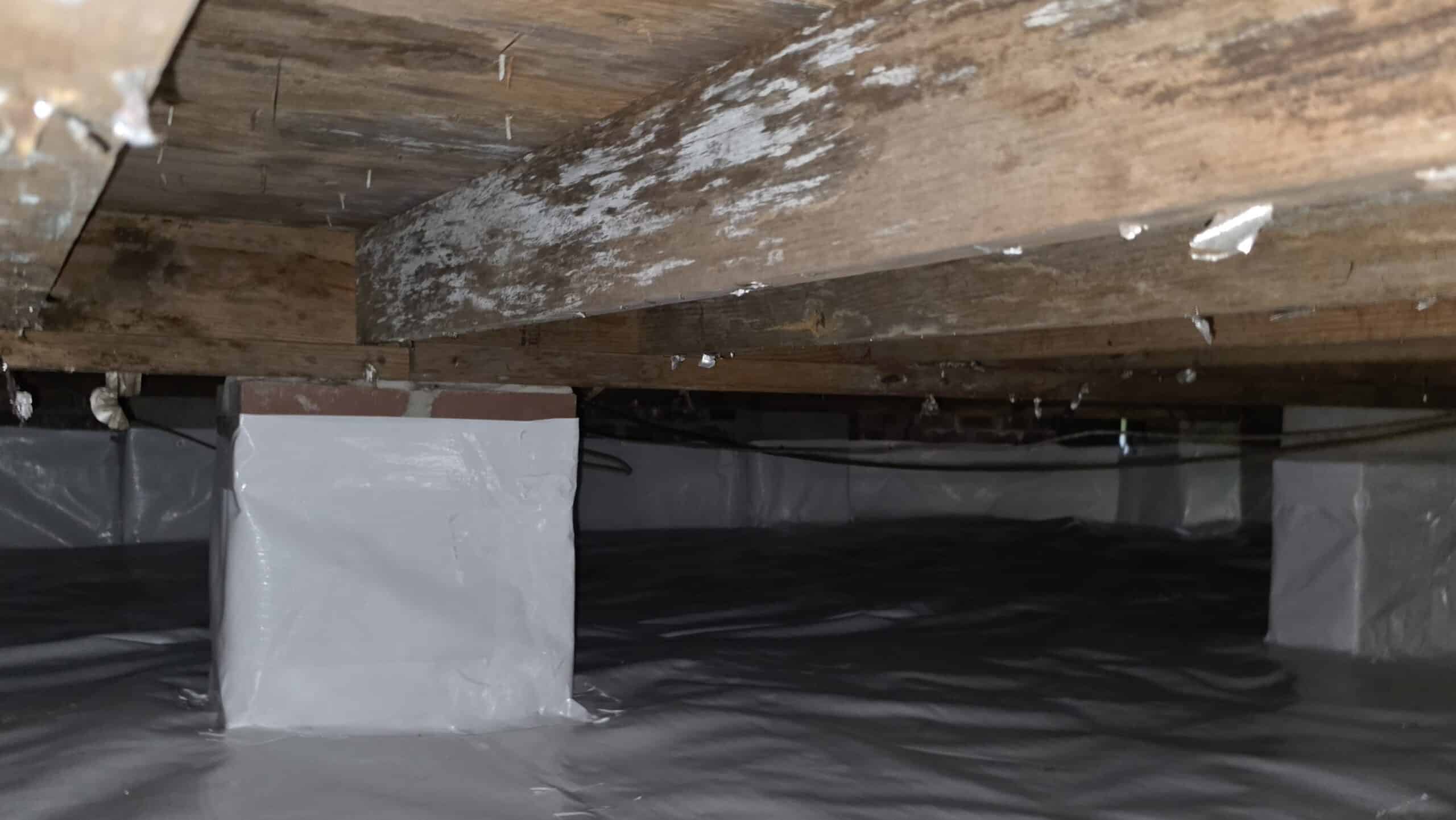
Some signs are obvious. Standing water under the house, for instance, is hard to miss. Other symptoms show up slowly, and homeowners may notice them upstairs before anyone opens the crawl space.
| Sign | What It May Indicate | Recommended Next Step |
| Standing water or puddles | Drainage failure, groundwater seepage, a plumbing leak, or poor grading. | Inspect the source quickly and avoid installing a liner over active water. |
| Damp soil | Ground moisture, drainage issues, or a missing vapor barrier. | Evaluate drainage and vapor-control needs. |
| Musty odor indoors | Crawl space humidity, mold conditions, or air leakage into living areas. | Check humidity, vent openings, insulation, and the vapor barrier. |
| Mold or mildew on wood | Persistent moisture or high humidity. | Schedule an inspection and address the moisture source first. |
| Sagging or bouncy floors | Possible wood rot, weakened joists, or support issues. | Have the framing and foundation supports evaluated. |
| Efflorescence on masonry | Water movement through foundation materials. | Inspect wall seepage and drainage conditions. |
| Pest activity | Damp, accessible conditions under the home. | Pair pest control with moisture correction. |
| Wet insulation | Condensation, leaks, or prolonged humidity. | Remove damaged material when needed and correct the moisture source. |
One symptom rarely tells the whole story. A musty smell could come from high humidity, wet insulation, or mold conditions. Standing water could come from rainwater, groundwater, or a plumbing leak. An effective inspection connects each symptom to the source.
What Causes Water in a Crawl Space?
Water gets into crawl spaces through surface runoff, groundwater movement, open gaps, leaks, condensation, and humid air. In many homes, more than one source is involved. Diagnosis should come before a product recommendation.
Poor Exterior Grading
The soil around a home should move rainwater away from the foundation. When the yard slopes toward the house or settles near the foundation, water can collect against the crawl space walls. During heavy rain, that water may enter through cracks, block joints, low openings, or porous materials.
Grade problems can be easy to overlook. A small, low area near the foundation may hold enough water to keep the crawl space damp after every storm. Repeated wetting can leave stains, odors, and softened soil under the home.
Poor Roof-Water Discharge Around the Foundation
Roof runoff needs a clear path away from the foundation. If discharge is too close to the house, the soil near the crawl space can become saturated. Once the soil is holding water, moisture can move toward the foundation along the path of least resistance.
Homeowners can reduce risk by keeping roof-water discharge paths clear and extended away from the foundation. If water still enters the crawl space after basic maintenance, it may need a more comprehensive drainage plan.
Groundwater and Hydrostatic Pressure
Groundwater can rise after prolonged rain. Saturated soil can also press water toward crawl space walls, a phenomenon called hydrostatic pressure. It can push moisture through porous foundation materials, cracks, gaps, or low points in the crawl space.
For crawl spaces below the surrounding grade, perimeter drainage may be needed for the same reason basements often need drainage: if the crawl space acts as the low collection point on the property, water needs a controlled route out.
Foundation Cracks, Gaps, and Openings
Cracks, open vent areas, rim joist gaps, utility penetrations, and poorly sealed access openings can let water or humid air into the crawl space. Some openings are simple sealing issues. Others may point to movement, settlement, or foundation damage that should be evaluated before cosmetic sealing is done.
Sealing helps reduce air and moisture movement, but active structural cracks require more attention. If a crack is cosmetic, CNT Foundations will tell you without upselling more costly repairs. If it’s tied to a deeper issue, the repair plan should address the cause, not just the symptoms.
Plumbing Leaks
A wet crawl space is sometimes caused by a plumbing problem. A water supply leak, a drain leak, or condensation on plumbing can mimic a waterproofing issue. That’s why an inspection should include plumbing lines and the areas below kitchens, bathrooms, laundry rooms, and mechanical equipment.
Ruling out plumbing early can save time and money. A sump pump won’t fix a leaking pipe, and a vapor barrier should never be used to hide an active leak.
Condensation and Humid Outdoor Air
In North Carolina, South Carolina, and Georgia, humid outdoor air can be a major source of crawl space moisture. When warm, moisture-laden air reaches cooler crawl space surfaces, condensation can form on ducts, pipes, masonry, and framing.
Vapor control and air control need to work together. A vapor barrier reduces moisture rising from the soil, air sealing reduces the movement of humid air, and dehumidification helps keep relative humidity under control after water entry and air leakage have been addressed.
Crawl Space Waterproofing Solutions That Work and When to Use Them
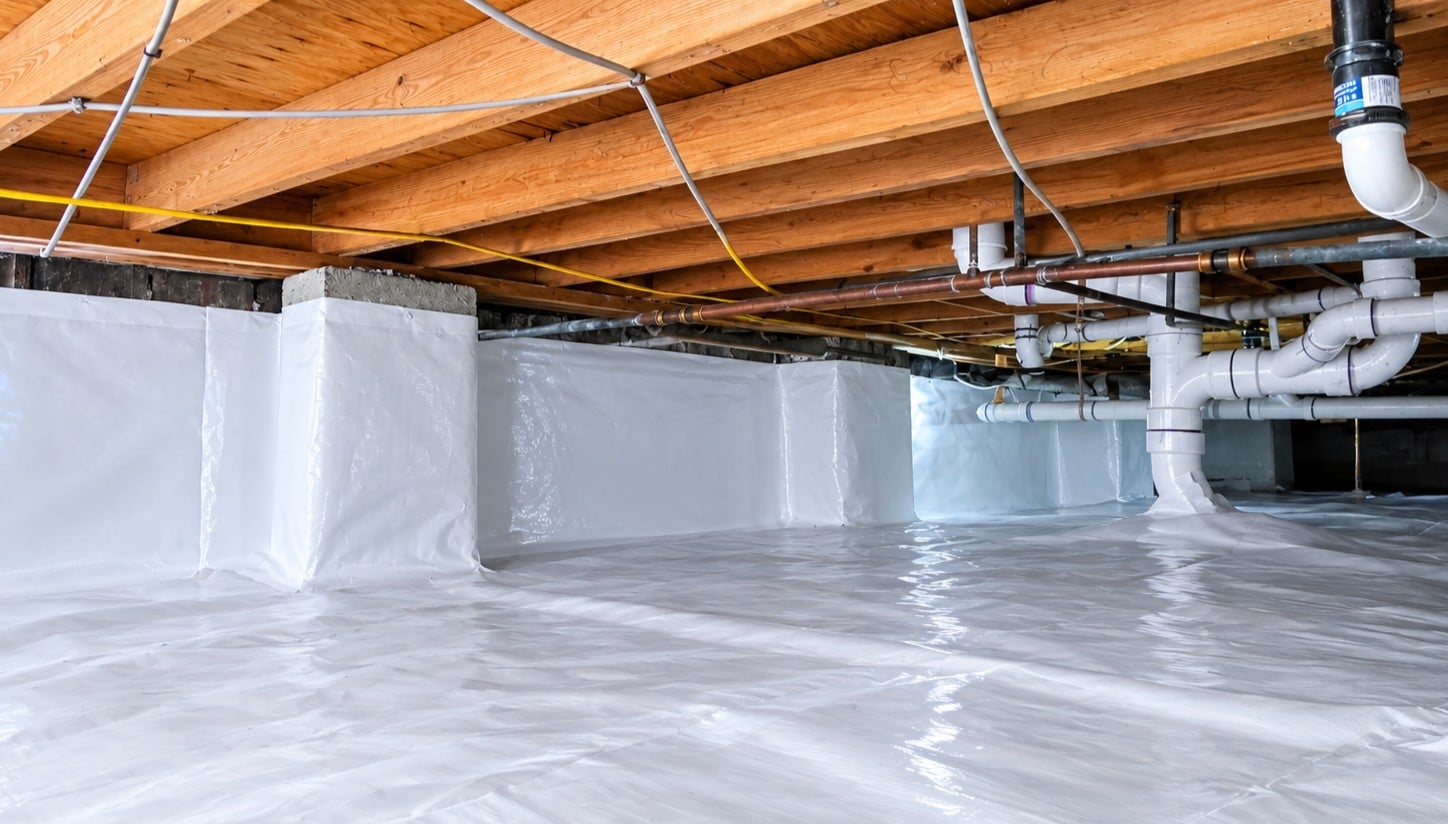
The best solution depends on the moisture source. A home with standing water needs a different plan than a home with dry soil and high humidity. A crawl space with softened wood or sagging floors needs structural evaluation, along with moisture correction.
| Solution | Best Used When | What It Does | Note |
| Exterior grade corrections | Water collects near the foundation after rain. | Moves surface water away from the home. | Often a first-line prevention step. |
| Roof-water discharge improvements | Roof runoff lands near the crawl space. | Reduces water load at the foundation perimeter. | Check discharge paths seasonally. |
| Interior crawl space drain | Water enters or collects along the crawl space perimeter. | Captures water and routes it to a sump system or discharge point. | Design should account for the water source and low points. |
| Sump pump system | Water must be collected and removed mechanically. | Pumps water out of the crawl space. | Consider backup planning and discharge routing. |
| Vapor barrier | Ground moisture rises from exposed soil. | Reduces vapor from soil and creates a cleaner surface. | It is one part of a water-management plan. |
| Wall vapor barrier | Moisture enters through crawl space walls. | Directs wall moisture downward and helps protect the space. | It may pair with drainage. |
| Crawl space dehumidifier | Humidity remains high after water control. | Helps maintain a drier crawl space environment. | It works best in a sealed or controlled crawl space. |
| Encapsulation | The crawl space needs to be separated from soil and outside air. | Seals ground, walls, vent areas, and openings as part of a broader moisture plan. | Bulk water should be resolved first. |
| Structural repair | Moisture has damaged wood or support components. | Restores support and stability. | It should follow moisture-source diagnosis. |
CNT Foundations can inspect your crawl space and explain which waterproofing options fit your home’s moisture source. Because we’re locally owned and operated and not tied to one dealer’s product, the recommendation can be built around the house rather than forced into the same package every time.
Drainage Systems and Crawl Space Drains
An interior crawl space drain collects water that enters along the perimeter or low points and directs it toward a sump basin or safe discharge route. The layout should reflect the crawl space slope, foundation shape, soil conditions, and the point where water enters.
A drain that misses the low point may leave water behind. A partial system may work for a localized issue, while widespread seepage often needs a broader design. During the inspection, the practical question is this: Where will the water go during the next heavy rain?
Sump Pumps and Discharge Protection
A sump pump is used to collect and mechanically remove water from the crawl space. The pump sits in a basin, activates when water reaches a set level, and sends that water away from the home through a discharge line.
Sump pump installation requires considerations for capacity, basin placement, discharge routing, and backup planning. Storms can cause water and power outages simultaneously, so homes with repeated water entry may need a backup pump. The discharge point should also be planned so that water doesn’t cycle back toward the foundation.
Vapor Barriers and Wall Liners
A vapor barrier reduces moisture rising from exposed soil. In better installations, the liner is fitted to the crawl space, seams are overlapped and sealed, edges are secured, and wall coverage is added where needed. Open seams, loose edges, and gaps around penetrations allow moisture to keep moving, so getting a high-quality installation makes a difference.
Liner thickness depends on the crawl space conditions and how the space will be used after repair; thicker reinforced liners may be recommended where durability is a concern. CNT Foundations also offers a lifetime warranty on encapsulation liners installed to our standards, giving homeowners more confidence in the long-term repair.
Dehumidifiers for Crawl Space Humidity
A crawl space dehumidifier helps manage humidity after water entry and air leakage have been addressed. It’s especially useful in humid climates where seasonal moisture can linger even after drainage is improved.
A dehumidifier should be sized for the space and drained properly. It should never be treated as a substitute for drainage, structural repair, or leak correction. If standing water remains, the dehumidifier will be fighting a problem that should have been fixed closer to the source.
Encapsulation After Waterproofing
Encapsulation seals the crawl space from the ground and outside air using a vapor barrier and a sealed liner system. It can improve cleanliness, odor control, humidity management, and comfort when installed after the water source has been addressed.
Encapsulation should come after active water intrusion, wet debris, mold conditions, and damaged framing have been addressed. A good contractor should resolve bulk water first, clean and prepare the space, evaluate damaged materials, seal vapor and air pathways, and then manage humidity.
Crawl Space Waterproofing vs Encapsulation
Crawl space waterproofing and crawl space encapsulation are related services, but they serve different purposes. Waterproofing focuses on bulk water: keeping it out, collecting it, or directing it away. Encapsulation focuses on separating the crawl space from soil moisture and outside air.
Many homes need both. If water enters after storms, waterproofing is usually the first priority. Once the space has stopped taking on bulk water, encapsulation can help keep ground vapor and humid air under control.
| Situation | More Likely Need | Why |
| Puddles or active water after storms | Waterproofing first | Bulk water must be controlled before sealing the space. |
| Damp soil without standing water | Vapor barrier or encapsulation evaluation | Ground vapor may be the main issue. |
| Persistent high humidity | Encapsulation and dehumidification evaluation | Air leakage and humid outside air may be contributing. |
| Mold, odors, and falling insulation | Combined moisture-control plan | Cleanup, sealing, vapor control, and humidity control may all be needed. |
| Sagging floors or wood damage | Structural inspection plus waterproofing | The moisture source and the damaged framing both need to be reviewed. |
A simple way to separate the two is to look at timing. Waterproofing manages water movement in real time. Encapsulation controls the crawl space environment after water is managed. If a contractor recommends encapsulation without checking for active water, ask how the system will handle the next storm.
How Professionals Inspect a Wet Crawl Space
A professional inspection should be practical and clear. The goal is to identify the source of moisture, assess whether structural damage is present, and recommend repairs in the correct order.
Identify the Water Source
The inspector should determine whether the issue is groundwater, surface runoff, condensation, plumbing, foundation seepage, or a combination. Staining on walls, puddle locations, wet soil patterns, plumbing routes, and weather history can all help narrow the source.
Check Drainage Grading and Discharge Paths
The outside of the home often explains the problem inside. Low soil near the foundation, roof water discharge near the crawl space, poor surface drainage, and saturated planting areas can all increase moisture beneath the home.
A local inspector should also pay attention to the lot shape and soil. Homes on low lots or near coastal moisture may behave differently than homes on higher, better-draining ground.
Measure Humidity and Look for Condensation
Humidity should be measured rather than guessed. A crawl space can look dry and still carry enough humidity to create condensation on cooler materials. In humid climates, this check is especially important around ducts, pipes, masonry, and framing.
Inspect Wood Supports Insulation and Foundation Walls
Waterproofing should include a structural look when the symptoms call for it. The inspector should check for softened wood, sagging floors, damaged supports, falling insulation, cracked masonry, and signs that floor framing has been affected by moisture.
If the structure is sound, that’s good news. CNT Foundations believes in honest assessments, including telling homeowners when a crack or a stain is purely cosmetic and doesn’t require a major repair.
Recommend a Repair Plan in the Right Order
Bulk water should be stopped or managed first, and drainage should be corrected before cosmetic cleanup. Damaged materials should be evaluated before the crawl space is sealed. Vapor control and air sealing should follow preparation, with humidity management added where the climate or crawl space conditions call for it.
How Much Crawl Space Waterproofing Costs
Crawl space waterproofing costs depend on the crawl space size, the water source, the drainage design, the liner requirements, the sump pump needs, cleanup, and any structural repairs. Broad online ranges can help homeowners understand the scope, but they can’t accurately price a specific crawl space.
| Cost Driver | Why It Matters |
| Crawl space size and height | Larger and tighter crawl spaces require more labor and material. |
| Amount of standing water | Active water problems often require drainage and pumping solutions. |
| Soil and grade conditions | Exterior water pressure can increase the drainage scope. |
| Liner type and installation detail | Thicker liners, sealed seams, and wall coverage affect both material and labor costs. |
| Sump pump requirements | Pump capacity, basin placement, discharge routing, and backup options affect cost. |
| Mold or debris cleanup | Contaminated or damaged materials may need to be removed before repair. |
| Structural damage | Wood or support repair adds work beyond waterproofing. |
| Humidity-control equipment | Dehumidifier installation and drainage integration affect the final plan. |
The most accurate way to price crawl space waterproofing is to inspect the water source, crawl space size, drainage needs, and any structural damage. That keeps the estimate tied to the specific home rather than a generic package.
Financing options are available through CNT Foundations to make needed repairs more accessible. During the estimate, the team can explain the recommended scope, warranty details, and available payment options without high-pressure sales tactics.
Can You Waterproof a Crawl Space Yourself?
Some prevention tasks are reasonable for homeowners. Other work should be left to trained professionals, as crawl spaces can contain electrical hazards, pests, mold, sharp debris, poor air quality, and tight working areas.
| Homeowner Task | Usually Reasonable DIY | When to Call a Professional |
| Keep roof-water discharge paths clear | Yes | If drainage still pools around the foundation. |
| Direct discharge away from the foundation | Yes | If water continues entering the crawl space. |
| Check access opening condition | Sometimes | If the opening is damaged, poorly sealed, or allows pest entry. |
| Place a simple ground cover | Sometimes | If there is standing water, mold conditions, or structural damage. |
| Install a sump pump or drain system | Usually no | If water collection, electrical safety, or discharge routing is involved. |
| Handle mold conditions or damaged insulation | Usually no | If growth is widespread or materials are contaminated. |
| Repair wood supports | No | Structural work should be professionally evaluated. |
Home sealing can affect indoor air pollutants, radon, combustion safety, and ventilation, so professional help may be needed when the work goes beyond basic maintenance. If the repair involves water, wiring, mold, or structural support, have the crawl space inspected before work begins.
Crawl Space Waterproofing for Homes in NC, SC, and GA
Crawl spaces in the Carolinas and Georgia face moisture patterns that many national guides overlook. Humid summers, heavy rain, coastal storms, clay-heavy soils, low lots, and seasonal swings can all affect how water moves around and under a home.
Many crawl space homes have poor moisture management, and symptoms are often noticed during the humid spring and summer seasons. That lines up with what homeowners across the Southeast experience: A crawl space may seem acceptable during part of the year, then smell musty or feel damp once warm, humid weather returns.
Why Humid Climates Make Crawl Space Problems Worse
Warm, humid air can enter through vents, gaps, and access openings. Once that air reaches cooler surfaces under the home, condensation can form. Moisture may collect on ducts, pipes, masonry, insulation, and wood.
A vapor barrier helps with ground moisture, but it doesn’t stop humid air on its own. Southeast crawl spaces often need a plan that combines water management, sealing, vapor control, and dehumidification.
Why Local Soil and Drainage Patterns Matter
Soil affects how water behaves after rain. Clay-heavy soils can retain water near the foundation, and loose sandy loam can shift under structural loads, potentially contributing to settlement concerns when support conditions are poor. Low-lying lots may collect stormwater, and coastal areas may experience high humidity for much of the year.
Because of those differences, one product package won’t fit every home. A repair plan should match the crawl space height, foundation type, lot slope, water source, and existing damage.
Why a Local Inspection Is Better Than a Generic Recommendation
CNT Foundations serves homeowners in North Carolina, South Carolina, and Georgia, including Charleston, Columbia, Greenville, Spartanburg, Myrtle Beach, Florence, Asheville, and Augusta. A local inspection looks at the home in the context of regional weather, soil behavior, and foundation type.
CNT Foundations is locally owned and operated, rather than a private equity-backed national chain, and our team isn’t limited to a single product line. We also proudly support U.S. troops and make a point of hiring veterans.
How to Maintain a Waterproofed Crawl Space
A waterproofed crawl space still needs occasional attention. Most maintenance is simple and helps catch small changes before they turn into larger issues.
| Frequency | Maintenance Task |
| After heavy rain | Check for new puddles, odors, or unusual sump pump activity. |
| Seasonally | Confirm roof-water discharge is directed away from the foundation. |
| Twice per year | Look for liner damage, open seams, pest activity, and insulation issues. |
| Annually | Have the crawl space reviewed if the home has a history of water intrusion. |
| As needed | Replace or service dehumidifier filters and confirm drainage lines are clear. |
If you have a sump pump, test it before the wettest parts of the year. If you have a dehumidifier, follow the manufacturer’s service schedule and keep the drain route clear. New odors, damp soil, or liner damage are good reasons to schedule an inspection before the problem spreads.
When to Schedule a Crawl Space Waterproofing Inspection
A crawl space inspection is worth scheduling if you see standing water, damp soil, mold conditions, wood rot, sagging floors, musty odors, high indoor humidity, pest activity, or repeated water entry after storms. The goal is to identify the source of moisture and recommend a practical repair plan in the correct order.
CNT Foundations provides crawl space waterproofing services, crawl space repair, encapsulation, foundation repair, and related structural care for homeowners across our service area. We back our work with long-term solutions and warranty protection, and our call center is available 24/7 to help book appointments.
Schedule a free crawl space inspection with CNT Foundations to find the source of moisture and learn about your repair options.