
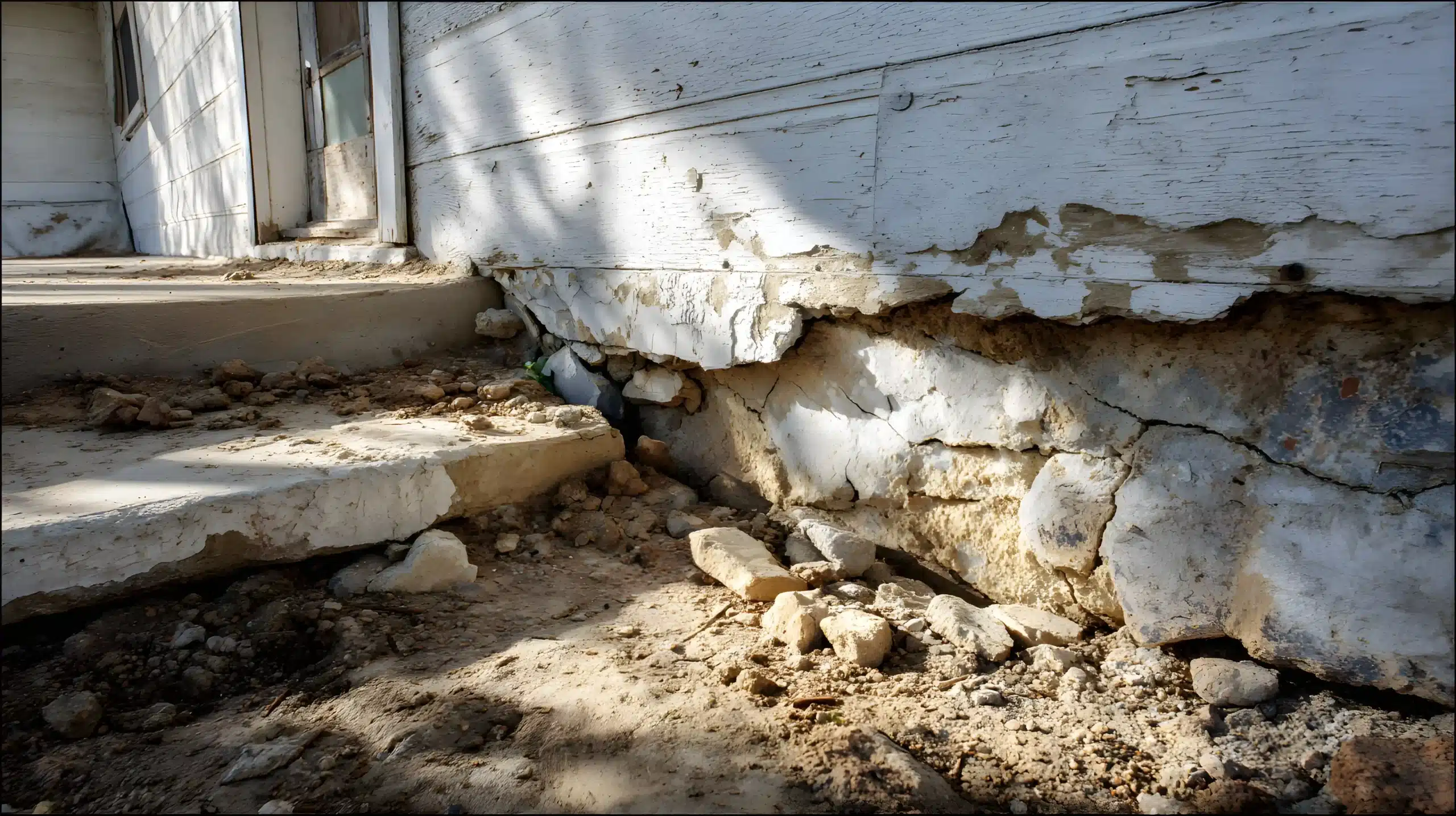
Your foundation is the backbone of your home, and it is also one of the easiest parts of the house to neglect until something goes wrong. The process of foundation settlement is slow, but many indications often go unnoticed for a long time. Learning the early signs of a settling foundation lets you prevent minor settlement from causing costly problems. Keep reading for more information on what foundation settlement is, its signs, and how to prevent further damage.
What Is Foundation Settlement?
When foundation settlement occurs, a home’s base slowly sinks into the ground below. This happens because the soil beneath the house naturally compresses as it supports the building’s weight. Every new structure undergoes some settling as the ground adjusts. The key is knowing when that settling is within normal limits and when it becomes an issue.
Is Foundation Settlement Normal?
All buildings settle somewhat after construction is completed. It is normal for a foundation to uniformly sink by an inch to three inches over the first few years. However, not all types of foundation settlement are harmless. When different parts of a house sink at different rates or by different amounts, there is a problem with the settlement, and it needs professional attention.
Signs of Foundation Settlement Issues
Since a foundation carries the weight of the entire home, as it begins to move unevenly, signs of foundation settlement appear throughout the property. Catching warnings early prevents minor problems from becoming major structural failures.
Interior Signs
Here are the common foundation problems you may find inside your home.
1. Cracks in Walls, Ceilings, and Floors
Uneven foundation movement forces a house’s structure to shift and bend. Diagonal cracks spread outward from door and window corners where stress concentrates. You’ll also notice stair-step patterns in basement masonry, ceiling splits, and floor cracks wider than a pencil that signal active structural movement.
2. Sticking Doors and Windows
Foundation settlement twists door and window frames out of their square and rectangular shapes. Doors drag across frames, don’t latch properly, or open on their own. Windows become hard to operate and let in drafts even when closed. Multiple sticking doors and windows in the same area indicate a foundation drop.
3. Uneven or Sloping Floors
Floors develop noticeable slopes when the foundation loses its level support. You might feel like you’re walking uphill in certain rooms. A marble placed on the floor will roll toward low spots on its own. There may be gaps open between baseboards and floors as the surface tilts away from level.
4. Bowing or Leaning Basement Walls
Soil pressure from the outside pushes against the basement walls when the ground gets saturated with water. This force causes walls to curve inward with a horizontal crack across the middle. The top of the walls may lean away from the ceiling joists above.
5. Gaps Between Walls, Ceilings, and Floors
Settlement separates the parts of a home from each other at the points where they connect. Crown moulding separates from the ceiling, baseboards lift from the floor, and vertical cracks appear in corners. Separations wider than a quarter inch mean serious structural displacement beyond normal settling.
Exterior Signs
These are the warning signs that can be visible outside your home.
1. Cracks in Bricks or Blocks
Exterior masonry shows signs of foundation settling with stair-step cracks along mortar lines. These zig-zag patterns occur when one part of the foundation sinks faster than adjacent areas. Severe cases can break individual bricks or cause sections to pull away from window frames.
2. Tilting Chimney
A leaning chimney signals major foundation problems since chimneys often settle before the house. Gaps widen between the chimney and exterior walls as the structure pulls away. You’ll see the chimney separating from the roofline or tilting inward against the roof. This phenomenon requires immediate professional help to prevent total collapse.
3. Separating Walls and Doors or Windows
Foundation drop pulls the exterior walls downward while the frames stay anchored to the interior structure. Growing gaps appear between the trim and the siding as these components move apart. Wide openings let you see daylight from inside and allow water penetration behind walls.
4. Cracks in the Top of the Foundation
Cracks just below where the framing meets the concrete indicate foundation settlement issues at this critical junction. Horizontal or diagonal splits concentrate near corners as the foundation center sinks. Flaking concrete around cracks means water is corroding internal steel reinforcement.
5. Water Pooling Around the Foundation
Standing water next to a foundation saturates the soil and compromises the foundation’s ability to support a home’s weight. Moisture softens and compresses the ground, allowing the foundation to sink unevenly over time.
Causes of Foundation Settlement
Settlement happens when the ground beneath a home loses its ability to provide steady support. Some of the main reasons this occurs are the following.
- Expansive or poorly compacted soil: Ground that wasn’t packed down properly during construction will keep compressing under your house’s weight. Clay soil will expand when wet and shrink when the weather is dry, creating an unstable base for your foundation.
- Poor drainage: Water that gathers around your foundation from blocked gutters or improper grading gradually weakens the supporting soil.
- Excessive moisture: Continuous wetness from heavy rain, leaks, or flooding softens the ground and reduces its load-bearing strength. This pressure can cause foundation cracks or shifts with time.
- Tree roots: Large trees near your home pull substantial moisture from the soil, causing it to dry out and contract in those spots.
- Soil shrinkage: Extended dry periods make the ground lose volume and separate from the foundation, leaving unsupported gaps.
- Inadequate construction: Foundations built without sufficient depth or reinforcement do not have the strength to resist movement effectively.
How to Fix Foundation Settlement Issues
Foundation settlement requires professional repairs to prevent the damage and restore your home’s stability. The following are proven methods used by experts.
- Piering and underpinning: This solution involves installing steel piers beneath the foundation to reach stable soil or bedrock far below the surface. The piers transfer the home’s weight to this part of the ground and can lift the foundation back to a level position.
- Polyjacking: A lightweight, expanding foam is pumped through small holes drilled into sunken concrete slabs to raise them. This method fills the gaps underneath and restores patios, garage floors, and walkways to their correct height.
- Wall anchors: Steel anchors are driven into stable soil away from the house and are attached to bowing basement walls with metal rods. Tightening the anchors pulls the walls back into alignment and prevents them from leaning further inward.
- Braces: Steel beams or reinforcement strips installed along the inside of foundation walls strengthen them against pressure from surrounding soil.
- Drainage correction: Proper drainage systems keep water moving away from your foundation to prevent soil-related settlement issues.
- Soil stabilization methods: Injecting strengthening materials into weak soil beneath the foundation makes it firmer and increases its ability to support your house.
Preventing Foundation Settlement
Follow these steps to take care of your foundation before problems start, and to keep your home structurally sound.
1. Maintain proper drainage and grading
The slope of your yard determines where rainwater goes when it reaches the ground. If the soil angles away from the foundation, water flows outward and doesn’t collect near the walls. Creating a gentle downward grade keeps the soil firm enough to support your house properly.
2. Install or repair gutters and downspouts
Gutters collect rainfall from the roof and channel it through downspouts to specific exit points. Without working gutters, thousands of gallons of water pour down right beside the foundation during every storm. You should position the downspout extensions to discharge water several feet away from the house.
3. Avoid overwatering landscaping near the foundation
Gardens and flower beds next to your home need careful watering to avoid foundation issues. Too much water from sprinklers or hoses makes the soil soft and less able to bear weight. Focus on giving plants just what they need rather than flooding the area, and check for leaky outdoor faucets. Consider varieties that require less water, but avoid plants with roots that reach too deep into the ground, since they will damage the foundation.
4. Schedule routine home inspections
Regular checks of the foundation let you catch warning signs while they’re still minor and fixable. Look for new cracks in walls and floors, doors that stick, or small gaps appearing around window frames. Finding these issues early means you can adjust your drainage or address soil problems before they lead to major structural damage. Pay attention to spots where the yard is sinking or eroding near the foundation perimeter.
When to Seek Professional Help
While minor cracks may appear normal as houses age, some situations call for immediate expert evaluation. If you notice that the cracks are expanding significantly within just a few weeks, or if your doors and windows suddenly become difficult to operate, these are clear signs that something serious is happening beneath the foundation. Water seeping into your basement through these openings makes the problem even more urgent since moisture weakens the structure quickly. Don’t wait until the damage worsens. Contact CNT Foundations today for a professional assessment and a customized repair plan to protect your home’s stability and value.
Summary
Foundation problems don’t fix themselves, and the more you wait, the more likely minor cracks are to become big problems that cost a lot of money and stress. The warning signs described in this article are your chance to catch settlement issues while they’re still fixable with effective solutions. Keep up with basic prevention steps and call in experts when you notice changes, because a stable foundation keeps your entire home safe and sound for years to come.