
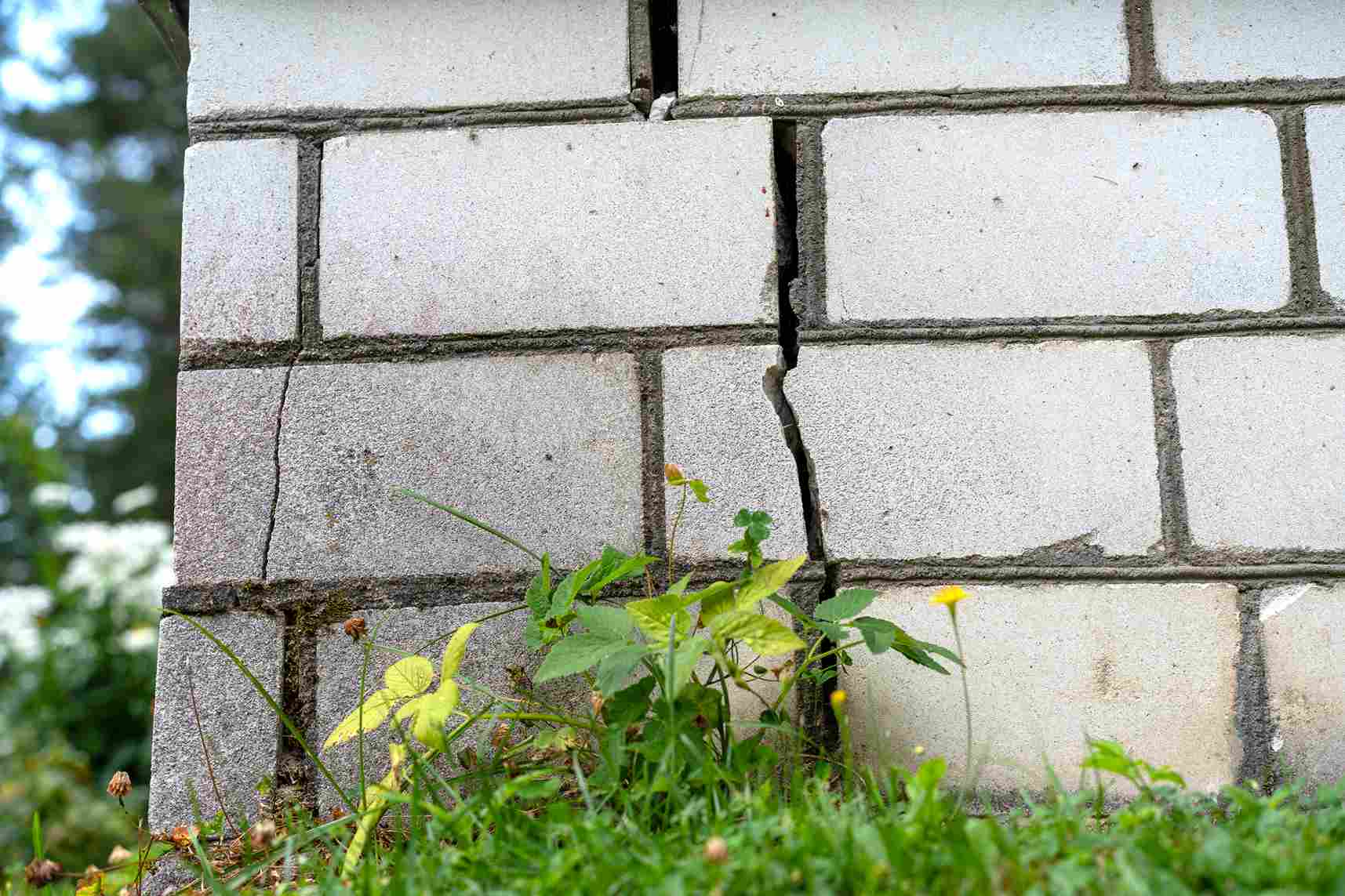
Foundation cracks can start with concrete shrinkage, soil movement, poor drainage, or even construction problems. Some stay small for years, while others widen and create problems inside the home. Foundation cracks aren’t always obvious; sometimes, they lead to sticking doors, uneven floors, or gaps around trim. These small signs often worsen over time and can lead to serious consequences for your home. But if you’ve ever wondered what causes a foundation to crack, you aren’t alone. We’re ready to help.
What Causes Foundation Cracks?
Foundation cracks usually form due to pressure, shifts in the surrounding soil, water damage, or shifts in the support beneath the home. The damage that then develops depends heavily on the underlying cause.
| Cause | What homeowners may see | Typical recommended repair |
| Concrete shrinkage | Hairline vertical cracks in the concrete | Monitor the crack and watch for water entering the home |
| Foundation settlement | Diagonal cracks, stair-step cracks, or uneven floors | Piers, underpinning, or other stabilization methods |
| Expansive soil | Cracks that worsen after wet and dry weather | Drainage correction and foundation stabilization |
| Poor drainage | Damp walls, leaking cracks, or low spots near the home | Grading, downspout extensions, surface drainage, and waterproofing |
| Hydrostatic pressure | Horizontal cracks or bowing basement walls | Wall anchors, reinforcement, and water management |
| Soil erosion or washout | Sinking slabs, voids, or cracks near exterior concrete | Soil correction, concrete leveling, and drainage work |
| Poor compaction or construction | Early cracks, recurring cracks, or slab movement | Inspection and a structural repair plan |
| Tree roots and landscaping pressure | Localized cracks near large trees or planting beds | Drainage changes, landscape adjustments, and stabilization, if needed |
| Plumbing leaks | New cracks near wet areas or unexplained moisture | Plumbing repair followed by a foundation assessment |
There is no universal repair option for foundation damage. The right solution for your situation depends heavily on the damage in question and the underlying cause.
Are Foundation Cracks Always Serious?
A crack by itself does not tell the whole story. A thin, dry crack in newer concrete may come from normal shrinkage. But water changes the equation; once moisture enters through a crack, the issue can spread into a basement, crawl space, or framing nearby.
The direction of the crack itself gives helpful clues. Vertical cracks often result from shrinkage or minor settlement, while diagonal cracks can indicate uneven movement in one part of the home. Stair-step cracks in block or brick usually follow mortar joints, which is why they deserve attention. Horizontal cracks require faster evaluation because they often develop under increased pressure on the foundation walls.
Movement carries more weight than size. If a crack grows, spreads, leaks, or appears near doors and windows that no longer open or close smoothly, you need to schedule a home inspection. The same goes for sloped floors, cracked drywall, trim gaps, or a wall that bows inward.
10 Common Causes of Foundation Cracks and How to Fix Them
Foundation cracks develop due to a wide range of reasons. From concrete shrinkage to changing soil conditions, many factors can affect the foundation’s structural integrity.
1. Concrete Shrinkage as It Cures
Concrete changes while it cures. As moisture leaves the mix, the slab or wall can pull inward slightly and form fine cracks. In a newer home, these cracks are often hairline-thin and vertical, though some appear as shallow surface damage.
You should photograph cracks as soon as you notice them. Measure them, and check them again after storms or seasonal changes. If the line stays dry and unchanged, it may be fine, but if it’s grown, it’s time to schedule an inspection. Don’t forget to check for water, as it can lead to serious long-term structural damage if left unaddressed.
2. Normal or Differential Foundation Settlement
Soil compresses under the weight of a house, and a small, uniform amount of settlement can occur without creating a major problem. Differential settlement is more concerning because it causes one section of the home to drop or shift differently from another section.
When this occurs, the signs usually appear in more than one place. Diagonal foundation cracks may show up near corners, masonry could develop stair-step cracks, and drywall may begin to crack within the home. You may even notice sloping floors or windows catching in their frame.
3. Expansive Clay Soil
Clay-heavy soil can swell when it takes on water and shrink during dry weather. That repeated change places stress against footings, slabs, and foundation walls. In parts of the Southeast, soil moisture can shift quickly after long dry spells followed by heavy rain.
Cracking caused by expansive soil often gets worse after weather swings. You might notice new lines after a storm season, cracks that reopen after patching, or exterior concrete that moves near the foundation. The crack direction can vary because the pressure may come from below the footing or from the side of the wall. If the foundation has already moved, stabilization may be needed as well.
4. Poor Drainage Around the Home
Water should move away from the house. When roof runoff or downspouts discharge too close to the wall, or the yard slopes back toward the home, the soil next to the foundation stays wet longer than it should. Over time, that added water can increase pressure, soften soil, and push moisture through existing cracks.
Drainage-related cracks often show up with damp walls, musty crawl space odors, wet spots after storms, or repeated leakage in the same area. Low spots near planting beds, patios, and walkways can make the problem worse, as they hold water near the foundation. This can often be fixed with downspout extensions, surface drainage, grading correction, or other similar preventive measures. The right solution depends on where the water is coming from and how far the damage has progressed.
5. Hydrostatic Pressure Against Foundation Walls
Hydrostatic pressure builds when water collects in the soil beside a foundation wall. The wetter the soil gets, the more force it can place against the wall. Basement and below-grade walls are most exposed to this kind of pressure.
A horizontal foundation crack is the classic warning sign, but bowing walls, leaning walls, and seepage through the crack may appear as pressure continues. In block walls, cracks may follow mortar joints across the wall, then widen at the center where pressure is strongest. The wall may need anchors, reinforcement, drainage upgrades, a sump pump, or another water management solution.
6. Soil Erosion or Washout
Moving water can remove the soil that supports concrete. Heavy runoff, broken drain lines, poor grading, and water moving under slabs can leave empty spaces below walkways, patios, garage slabs, or parts of the foundation.
The first sign may be outside the home. A sidewalk drops. A patio tilts. A gap opens under a slab. Cracks near the foundation may develop if soil loss reaches the footing or draws water back toward the house.
The fix begins with water control. After the water source is corrected, CNT Foundations can determine whether concrete lifting, concrete leveling, soil correction, or foundation stabilization is appropriate. For sinking exterior concrete, lifting can restore the surface and help direct water away from the home.
7. Poor Soil Compaction or Construction Issues
A foundation needs firm, well-prepared soil beneath it. If the soil was placed loosely or the footing area was not prepared correctly, settlement can appear after construction. Some homes reveal the issue early, but others show damage years later after wet weather or dry spells change the soil.
You can recognize this problem by slab cracks, recurring cracks after patching, settlement near additions, and masonry cracks. Doors or windows may also shift out of square if the framing responds to movement below. The diagnosis plays a key role here; a foundation repair expert will need to look for the root cause of the damage before determining the right repair approach.
8. Tree Roots and Landscaping Too Close to the Foundation
Trees and planting beds can affect the soil around a foundation. Large trees draw moisture from the ground, and their roots may also interfere with drainage paths or nearby concrete. Even your planting beds could be retaining water next to the home, leading to cracks developing in the surrounding concrete. In dry weather, the opposite can happen when roots pull moisture from the soil, leading to one side of the foundation settling more than the rest.
When this occurs, the damage is often localized. Cracks may appear near a large tree, a walkway may shift, or soil near the home may stay wetter in one area. Don’t treat the area based on a guess—a professional inspection can separate root-related soil movement from drainage trouble, erosion, or normal settlement.
9. Plumbing Leaks or Hidden Water Problems
A hidden leak can change the soil under a home. Water from a supply line, a drain line, a sewer line, or crawl space plumbing can soften the ground or wash soil away, and this can lead to damage that goes unnoticed for far too long.
You’ll want to look for moisture clues, like a rising water bill, musty odor, damp soil in the crawl space, a wet slab area, or a new crack in the walls. Even if a crack is the first sign you notice, the water damage could have been progressing for some time. You need to repair the plumbing issue first before fixing the damage.
10. Freeze-Thaw Cycles and Temperature Changes
Concrete and soil expand and contract as temperatures change. In colder parts of the region, especially upland or mountain-adjacent areas, small cracks can worsen when water enters them and freezes. Ice occupies more volume than liquid water, so the crack can widen with repeated cycles.
These cracks are often found outside, near exposed concrete, or in areas where water sits against the foundation. Some widen after winter weather, then become more noticeable during spring inspections or after rain. If the crack widens, leaks, or shows further interior damage, you need to call a professional to determine whether a structural repair is needed.
How to Tell What Type of Foundation Crack You Have
The direction of the crack helps, but it does not give a final diagnosis. Width, water, movement, and symptoms inside the home all matter.
| Crack type | What it may indicate | Urgency level |
| Hairline crack | Shrinkage or early moisture entry | Low to moderate; monitor and inspect if leaking |
| Vertical crack | Shrinkage or settlement | Moderate if widening or leaking |
| Diagonal crack | Differential settlement or soil movement | Moderate to high, depending on movement |
| Stair-step crack | Masonry settlement or foundation movement | High; schedule a professional evaluation immediately |
| Horizontal crack | Hydrostatic pressure or wall movement | High; schedule professional evaluation promptly |
| Crack with water | Moisture intrusion and possible pressure or drainage issue | Moderate to high; do not ignore |
Can You Fix Foundation Cracks Yourself?
Even with no experience, you can still monitor a small, dry, stable crack. Mark the ends with a pencil, measure the width, take a photo from the same angle, and check it again after a heavy rain or a seasonal change.
Patching has limits. A leaking crack, a horizontal crack, a stair-step crack, a crack beside a bowing wall, or a crack paired with floor movement needs professional evaluation. Remember, though, that even if you patch a small crack, it could be a sign of a serious problem developing. If you’re ever unsure, always trust a team of professionals to keep your home safe.
Foundation Crack Repair Options
Repair should match the cause. A stable crack that only needs water control is handled different than a crack caused by settlement, wall pressure, or soil washout. Typically, you can expect:
- Crack sealing or injection: This is used for stable cracks or leaking cracks where wall movement is not the main issue.
- Drainage improvements: This is used to correct poor grading, concentrated roof runoff, saturated soil, or water pressure.
- Wall anchors or reinforcement: This is ideal for bowing walls, horizontal cracks, or lateral pressure
- Piers or underpinning: This helps repair damage caused by settlement, sinking, or differential movement.
- Crawl space support repairs: This helps restore sagging, uneven, bouncy, or sloped floors tied to crawl space problems.
- Concrete lifting or leveling: This can be used to repair sinking slabs, patios, sidewalks, or concrete near the foundation.
Your foundation repair team will explain your options, what repair options are available, and why certain options are more ideal than others.
How Much Does It Cost to Fix Foundation Cracks?
The cost to fix foundation cracks depends on the cause. A small crack that needs sealing is a different project than a horizontal crack caused by hydrostatic pressure or a stair-step crack caused by settlement. Access, crack length, water intrusion, crawl space conditions, basement conditions, and stabilization needs all affect the repair plan.
That’s why our team at CNT Foundations provides no-obligation consultations. We’ll work closely with you to determine whether the issue is cosmetic, moisture-related, or structural before choosing a repair. These inspections are the key to finding out whether a short-term patch or a long-term repair is more likely to correct the issue.
When to Call a Foundation Repair Professional
Schedule an inspection if a crack is widening, spreading, or changing. Those are signs that the soil or structure is still moving, and an early diagnosis usually gives you more repair options.
Horizontal cracks in the basement or foundation walls need quick assessment, because these signal pressure against the outer walls. If you have brick or masonry, watch for stair-step cracks, and look for water intrusion regardless of material. Moisture entering through a crack needs attention because it can damage nearby materials and create crawl space issues.
However, some signs are a little more obvious. If you ever notice bowing walls, leaning walls, sticking doors, uneven floors, trim gaps, and multiple cracks in separate areas are stronger warning signs. You can always call our team at CNT Foundations and schedule an inspection, because it’s always better to be safe than sorry.
How to Help Prevent Foundation Cracks
Good water management prevents many foundation problems from getting worse. Extend downspouts away from the foundation, control roof runoff, and maintain positive grading so rainwater moves away from the house. If you ever have a plumbing leak, address it immediately to prevent soil erosion and water damage.
Don’t forget to regularly inspect your crawlspace, though. Damp crawl spaces can contribute to wood damage, humidity problems, sagging floors, and structural problems that lead to serious issues. Even your landscaping matters: water-loving plants too close to the foundation can cause water damage to the home’s exterior.
Why Homeowners in NC, SC, and GA Trust CNT Foundations
CNT Foundations helps homeowners across South Carolina, North Carolina, and Georgia protect their homes with foundation repair, crawl space repair, crawl space waterproofing, basement services, concrete lifting, and more. With our experience and familiarity with local conditions, we know how to find the root cause of specific problems, explain potential solutions, and perform repairs that last for years.
With more than 25 years of experience, more than 10,000 completed projects, and our dedication to keeping your home safe, we’re ready to step in and help. If you’re dealing with foundation issues, schedule an estimate with our team today, and take your first step towards a safer, more durable home.