
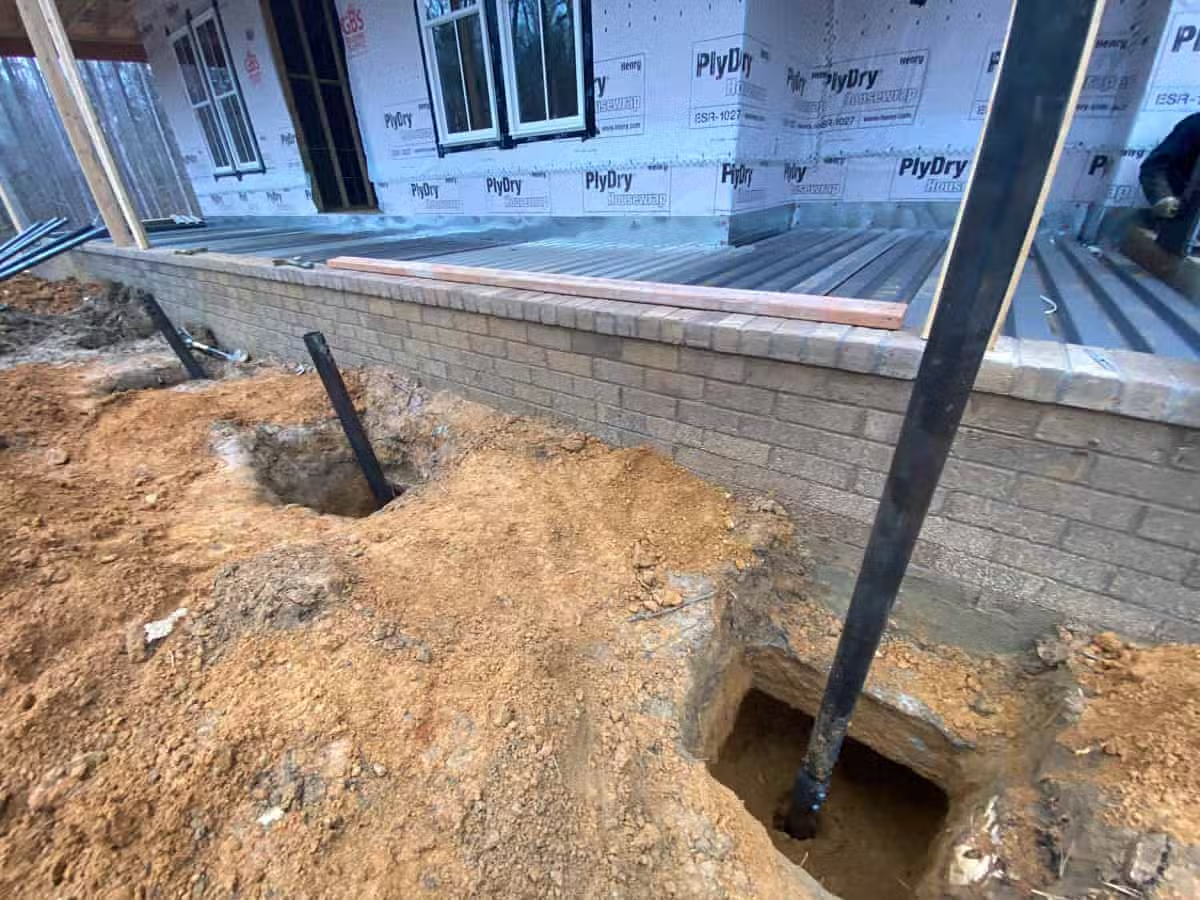
Foundation damage doesn’t stay small for long. It has a way of starting small and getting expensive fast. But the repairs used to fix foundation damage are just as important as recognizing the smallest signs that something is wrong. Some repairs last decades, but others barely scratch the surface of the underlying problem. From underpinning to pier installation, choosing the right approach is critical.
Signs You Need Foundation Repair
Your home’s foundation holds the entire structure in place, so noticing problems early gives you the best chance of keeping it stable. Make sure you’re regularly checking for:
- Cracks in walls or ceilings: Diagonal cracks near window corners and stair-step patterns in exterior brickwork mean one section is settling faster than another.
- Uneven or sagging floors: Sloping, bouncing, or warping floors may indicate that support beams have shifted beneath the surface.
- Gaps between walls and floors: Visible separation where walls meet the floor or ceiling can mean the foundation is pulling away from the structure.
- Bowing walls: Basement walls that push inward are under pressure from the surrounding soil and need immediate action.
These are small problems on their own. However, if you notice one or more of these progressing, it’s time to call the experts.
5 Best Foundation Repair Methods
A failing foundation can cause intense structural damage to a home if the right solution is not applied in time. Fortunately, the right repair company can assess the damage and use their experience to determine which repair technique can stabilize and restore the foundation.
Helical Piers
Helical piers are a good option for lighter structures such as porches and patios, especially when the underlying soil has become too weak to support the foundation. These require steel shafts with spiral blades to be screwed into the soil until they reach a solid layer capable of supporting the structure’s weight. Once in place, brackets are attached to move the structural load onto the new supports. This method needs very little digging and stabilizes the foundation quickly, even in areas with poor soil conditions.
Underpinning
Underpinning is used when a foundation was not built deep enough to sit on stable ground, or when the underlying soil weakens over time. The repair involves digging out sections beneath the foundation and pushing the footings down to a stronger soil layer. Underpinning works quite well for older homes where the foundation was not originally built to reach load-bearing ground. It can stop a structure from sinking further and help bring it back closer to its original position, making it one of the most reliable foundation repair methods for long-term stability.
Polyurethane Foam Injection
Concrete slabs, such as driveways and interior floors, can begin sinking when voids form in the soil beneath them. Polyurethane foam injection can be used to correct this. Small holes are drilled through the slab, and a high-density foam is pumped into the gaps below. The foam expands, hardens to fill the voids, and pushes the concrete back up to a level position. Since the material is lightweight, it does not put additional pressure on already weakened soil. The surface can also be used again soon after the repair, making this a quick and practical solution.
Wall Anchors
Wall anchors are the right solution when a foundation wall begins to crack, bow, or lean inward. First, steel plates are placed in the yard. These connect to wall plates inside the basement using steel rods that pass through the foundation wall. Together, these anchors brace the wall from both sides and prevent it from moving inward any further. And if needed, the rods can be tightened over time to guide the wall back towards its original position.
Slab Piers
If your concrete slab foundation is cracked or no longer level, the soil beneath may have shifted or lost its ability to support the structure. Professionals drill holes in the slab at specific points, and steel piers are driven down into the ground until they hit a more stable, load-bearing layer. Then, the repair team will use braces to connect the piers to the slab and lift it back to a level position. This avoids the need to remove and replace the entire concrete floor, and it also saves time and reduces disruption.
Choosing the Right Foundation Repair Method
Foundation problems vary too much to have a single go-to fix, so the method chosen needs to suit the specific situation. Picking the wrong one risks making things worse and driving up costs a lot. That’s why it helps to:
- Diagnose the specific issue: Foundation damage can range from minor surface cracking to serious structural movement, and the difference matters a great deal. A proper inspection identifies exactly what type and level of damage is present throughout the structure. From there, it becomes much clearer what kind of repair is actually warranted.
- Find the underlying cause: Even a well-executed repair won’t last if the root cause goes untreated. Drainage problems, leaking pipes, and tree root growth are common triggers that need to be identified and resolved as soon as possible.
- Examine the soil condition: Soil type has a direct impact on how a foundation behaves and which repair systems will perform reliably over time. Clay soils shift depending on the moisture content, while loose or sandy soils lack the density needed to support heavy structural loads. Subsurface testing helps determine how deep any anchoring system needs to go to reach stable ground.
- Consider the structure type: A home’s foundation style, materials, and overall weight all influence which repair method is the right fit. Slabs, crawl spaces, and pier-and-beam foundations each require different equipment and techniques, and using the correct one prevents unnecessary stress on the structure during the repair process.
- Get professional help: A certified foundation specialist accurately evaluates the damage and recommends a plan that aligns with local building requirements. Working with someone experienced in the area also means their advice accounts for local soil and climate conditions that general contractors may overlook.
If you’re ever unsure, don’t risk it. A professional team can step in and give you the support you need to restore your home’s structural integrity.
When Should You Call a Professional?
Foundation damage can look minor on the surface, but it often points to a much bigger problem underneath. That is why bringing in a licensed contractor is the smartest move. Teams like ours here at CNT Foundations have the training, tools, and local knowledge to find the real cause. Rather than risk a costly mistake, contact our team today. We’re ready to help you keep your home and family safe for years to come.
Summary
These repair methods exist because foundation problems come in different forms. A fix that works for a sinking slab won’t do much for a bowing basement wall. With options like underpinning, polyurethane injection, wall anchors, and pier installation available, professional teams can address the root cause of the damage and choose a method that will hold up over time. If you get the right professional involved early, the repair addresses what is actually happening beneath the surface, not just what is visible from inside the home.