
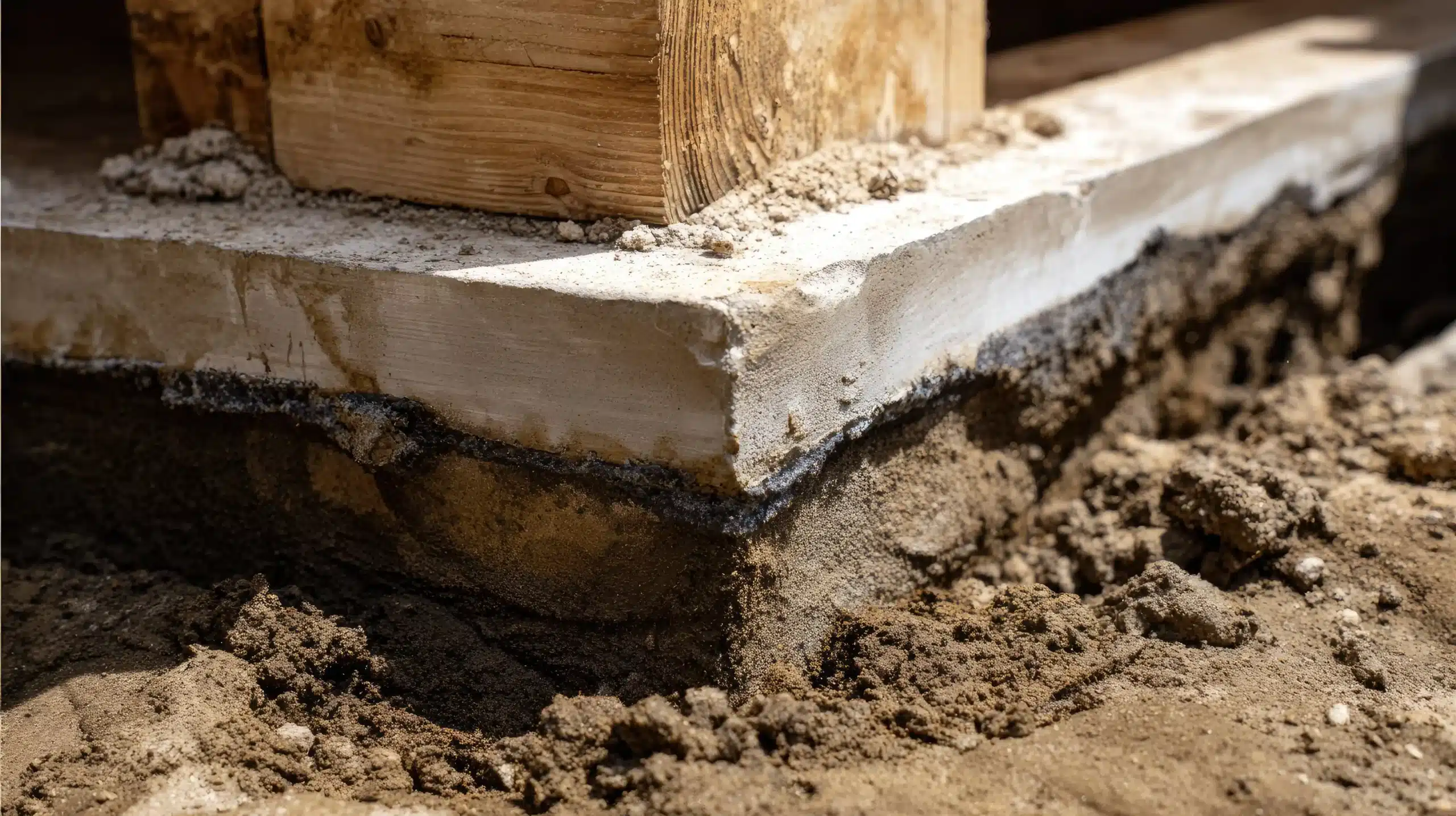
A building may appear to be in good condition from the outside, yet its foundation could be shifting from beneath it. Most homeowners only start being curious when the situation becomes too obvious to ignore. By this time, the options on the table and the costs attached to the damage can feel overwhelming without the right context. Often, this is where foundation underpinning comes into play. But what does this entail, exactly?
What Does Underpinning a Foundation Mean?
Foundation underpinning is a process designed to repair and reinforce an existing building’s foundation. The goal is to extend the weight and support structure deeper into the ground. It’s used when soil weakens and shifts, when the structure takes on more weight from renovations, when nearby construction disturbs the ground, or when natural events like floods and earthquakes cause damage.
To fix these problems, builders use specific methods, such as micropiles or jet grouting, to move the building’s load onto a stronger layer of soil. Underpinning is often more affordable and practical than tearing out the entire foundation and starting over.
Common Signs Your Foundation Is Failing
Foundation problems build up quietly and are easy to miss. However, the sooner you notice a problem, the sooner you can step in and correct the situation. Watch for:
- Horizontal or diagonal cracks in walls
- Floors that slope, sag, or feel uneven
- Stair-step cracks in exterior brick or masonry
- Splits or gaps in basement floors or tiles
- A chimney leaning or separating from the structure
- Doors and windows that stick or won’t close
- Water pooling or soil eroding around the foundation
Each of these is a sign of potential damage, so don’t ignore it.
Top Causes of Foundation Instability
Foundation problems always have an underlying cause. It could be soil shifting, an installation error, flooding, or even a nearby natural disaster. Knowing what’s causing the damage can help you determine if underpinning could correct the problem.
Expansive Soil
Clay soil swells when it absorbs water and shrinks when it dries. But that constant shifting puts repeated pressure on the foundation from below. Anchoring into deeper, stable soil through underpinning stops that cycle from causing further damage.
Improper Soil Preparation Before Construction
A foundation is only as reliable as the ground it sits on. If the soil was not properly compacted before construction, it continues settling unevenly under the building’s weight. Reaching past that weak layer to more stable ground is exactly what underpinning is designed to do.
Tree Roots
Large tree roots draw moisture from the soil beneath a home, causing the soil to shrink and pull away from the footing. The only solution is to move the foundation below the level where tree roots are active, making underpinning an effective fix.
Soil Erosion
Water runoff erodes the soil beneath the footings, but that can leave the foundation without a solid base. Underpinning extends it to a level that surface water cannot reach. That means that those gaps no longer threaten the structure above.
New Floor Additions
Adding a new floor increases the weight on the foundation beyond what it was initially built to carry. If the soil under the house can’t withstand the load, the structure slowly shifts. Underpinning strengthens the structure’s footings, and that lets the building safely support the extra demand.
Foundation Damage
Once a foundation loses strength due to age or poor materials, the building above becomes unstable. By using underpinning to reinforce the structure against this damage, you can restore stability and keep your home safe.
Natural Disasters
Earthquakes, floods, and droughts can impose unexpected stress on footings that were not originally designed to withstand such disasters. The ground can shift or wash out quickly, leaving the foundation cracked or unsupported. Securing the structure on stable ground below, underpinning helps restore stability.
Traditional Methods of Foundation Underpinning
Foundation underpinning methods focus on stabilizing a building’s base when the existing foundation can no longer safely support the loads above it. There is no universal answer when it comes to underpinning; each approach offers different benefits depending on the situation.
Mass Concrete Underpinning
This is one of the oldest foundation repair techniques still in use. First, the workers excavate sections beneath the footing in a set sequence. Once each section is complete, they fill it with concrete, then move on to the next area. This keeps the building supported as each section cures and takes on more of the load before the process disrupts the nearby ground. Upon completion, the sections form a continuous concrete base that’s deeper than the original footing.
Beam and Base Underpinning
This method places a reinforced concrete beam beneath or in place of the existing footing to redistribute the building’s weight. The beam transfers that load onto concrete bases set at calculated points along its length. It works best when only certain sections of a foundation are compromised rather than the full length.
Piled Underpinning
Piled underpinning is used when soil conditions are too weak for standard excavation to reach a stable bearing layer. A site assessment is carried out first to determine the correct pile type and required depth. Concrete caps connect them to the existing foundation, safely redirecting the building’s load downward.
Jet Grouting
Jet grouting injects high-pressure cement slurry into the soil, mixing it with surrounding material to create a solid underground column. The drill rod rotates and rises up with the cement mixture, forming cylindrical columns that cure in place without open excavation. It’s best applied when there’s either a confined site or soil conditions make other methods impractical.
Modern Foundation Underpinning Techniques: Piering Systems
There are three different piering methods used in foundation underpinning: helical piers, push piers, and slab piers. Each of these handles the structure’s weight differently.
Helical Piers
Helical piers are steel shafts with spiral plates that are rotated into the ground using small, precise equipment. The piers are driven down until torque readings show that the pier has reached a stable, load-bearing layer. There is minimal vibration during the installation, making it safe to use near existing structures. This precision and low site impact make them suitable for both new builds and homes already showing signs of settlement.
Push Piers
Push piers use hydraulic force, along with the building’s own weight, to drive segmented steel pipes through weak soil to reach a solid bearing layer. Once it’s locked into place, they stabilize the foundation, allowing it to be lifted back to its original level. This method works well where unstable soil is too deep to allow surface-level repairs.
Slab Piers
Slab piers are placed beneath concrete slab foundations where poor drainage, water intrusion, or shifting soil has caused sections to sink. As the slab loses support, it leads to cracked concrete, gaps in walls, and sticking doors and windows. Slab piers restore support to those weakened areas and prevent further damage.
Cost of Foundation Underpinning
The cost of foundation underpinning isn’t fixed. It’s determined by several factors coming together. A repair company will assess:
- What pier type is needed
- The number of piers the job needs
- How much labor will be required
- The soil and foundation type
- The accessibility of the website
- The extent of the total damage
- Whether permits are required
Before beginning any work, the repair company will determine all of this and more. Then, they’ll provide a full quote to give you a full understanding of the situation.
How Can You Prevent Foundation Issues?
Keeping your foundation in good condition requires consistent upkeep and a few smart precautions. You’ll want to:
- Regard your yard: The soil around your home should slope away from the foundation, with at least a six-inch drop over the first ten feet. This helps rainwater flow away rather than into the ground next to your foundation.
- Clean your gutters and downspouts: Leaves and other debris cause water to spill over right next to your home. Clean them at least twice a year and position downspouts so water drains five to ten feet away.
- Install a drain tile system: Proper drainage systems redirect groundwater away from your foundation. You can reach out to a professional to find the right fit for your home.
- Keep large trees away: Tree roots pull moisture from the soil and can cause the ground beneath your foundation to shift, so keep trees at least 15 feet away from your home.
- Prepare the soil before construction: Testing and compacting the soil before building creates a stable base that reduces uneven settling over time.
Each of these steps plays a critical role in preserving your foundation and your home’s structural integrity.
Is Foundation Underpinning Right for You?
Foundation underpinning works best when soil problems are too deep for surface repairs to resolve and the structure’s stability is already at risk. Since the ground itself is the source of the problem, the fix needs to address the situation below the structure. Foundation underpinning is ideal for properties dealing with subsidence, uneven settlement, shallow aging footings, heavier loads from new additions, or ground disturbed by nearby construction. A structural engineer can determine if the soil can no longer bear the load and whether underpinning is the answer.
Contact CNT Foundations for Professional Help
Wall cracks, sticking doors, and uneven floors can signal that your foundation needs attention before the problem grows larger. If you suspect foundation damage, reach out to us at CNT Foundations. We offer underpinning, pier installation, and many other support methods, all to treat foundation issues the right way. We’ll assess the damage, find the root cause, and provide a solution that keeps your home stable and safe for years to come. Contact CNT Foundations today for a free, no-obligation estimate and a repair plan made for your home.
Summary
A shifting foundation doesn’t always give a warning until the damage is already done, so learning the signs early on is like being one step ahead of a much bigger problem. Underpinning works because it goes straight to the source, bypassing weak or unstable soil to anchor your home in ground that can actually support the load. Get the right method, move at the right time, and what could have been a structural nightmare becomes a straightforward fix.