
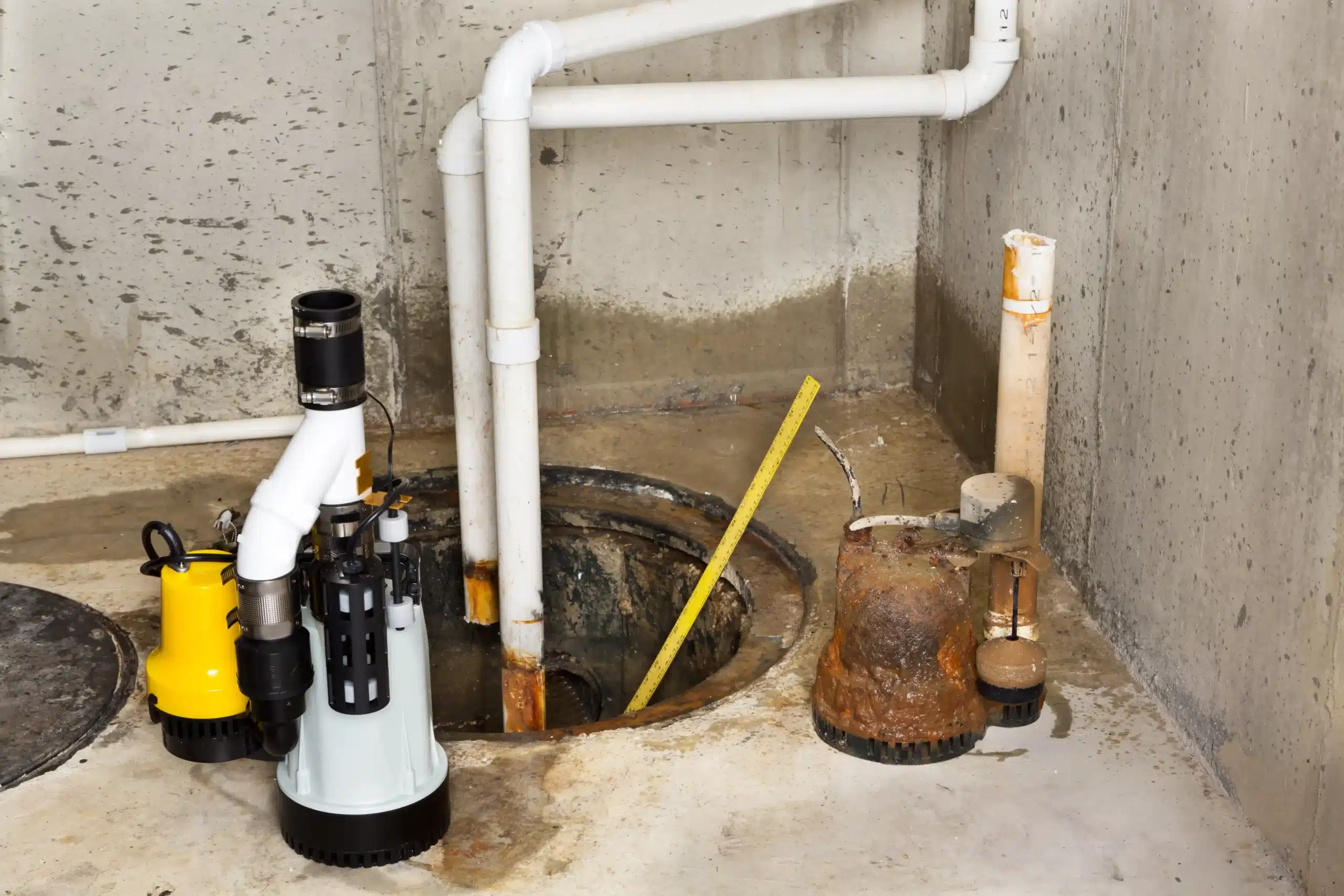
A sump pump is a critical component of your foundation’s waterproofing system, responsible for diverting water away from your home, keeping it safe and dry. Installing a sump pump requires care because there are various types, each offering a different benefit for your waterproofing system. In this blog, we will go into detail on what a sump pump is, how it works, and the advantages of different types of sump pumps.
What is a Sump Pump?
A sump pump is a device that moves water away from your home’s basement or crawl space to the outside of your property. It is installed in a pit or a basin dug below the basement or crawl space floor. A sump pump detects rising water pressure and proactively pumps excess water away from your home through a discharge line.
How Does a Sump Pump Work?
A sump pump works by detecting rising water levels beneath your basement floor. It has switches that automatically activate when the water reaches a certain level. When a float switch turns on, it triggers the pump to raise the water level and discharge it through a line that carries it out of your home. A sump pump can be powered by electricity, a battery, or water pressure.
Signs You Need a Sump Pump
A basement or a crawl space without a sump pump is at risk of water damage. Here are some signs that your basement needs a sump pump.
- Basement or crawl space flooding: If your home is in a high-risk area for rainfall or flooding, a sump pump is essential to prevent water from accumulating in your home and to ensure it is removed promptly.
- Mold growth: Growing moisture levels in your basement or crawl space make it a breeding ground for mold. The first sign of mold in your home indicates that a sump pump is needed.
- Foundation cracks: Cracks in your foundation indicate water seepage. To deal with these leaks, a sump pump should be installed.
- Efflorescence: When water passes through the walls and the floor of a concrete foundation, it leaves behind a powdery white substance called efflorescence. It indicates your foundation would benefit from a sump pump to manage water effectively.
- Musty odors: Rising water levels, excess humidity, and moisture intrusion spread musty, unpleasant odors in your basement or crawl space. This smell is an indication that a sump pump installation is needed.
Types of Sump Pumps
Choosing the right sump pump for your home is crucial to protect it. Below are various types of sump pumps discussed in detail.
Submersible
A submersible sump pump is submerged and closed inside the pit in a basement or crawl space. It combines a pump and a motor into a single unit and is often quieter, saves floor space, and clogs less than a pedestal pump. However, since they are completely submerged in water, they may not last as long as other pumps. For homes prone to flooding, a submersible sump pump is the best option.
Pedestal
A pedestal sump pump consists of a separate pump and a motor. Unlike submersible pumps, pedestal pumps are installed above the basin in a basement or a crawl space. Since the motor is not submerged in water, this type of sump pump has a longer lifespan than a submersible pump. It can also be easily accessed for routine maintenance. That said, it can be louder and take up more space.
Battery Operated
A battery-operated sump pump is a sump pump powered by a battery. It’s a great option for your home if you’re looking to reduce electricity bills. The float switch activates when the water level reaches a dangerous threshold.
Water Powered
A water-powered sump pump uses water pressure to pump water out of your basement or crawl space. Its biggest advantage is that it doesn’t require electricity or battery backup to operate. However, it significantly increases your water bill, and it is not always permitted for installation in homes in some cities.
Combination Sump Pump
A combination sump pump is powered by both electricity and battery backup. It’s ideal for homes that experience power outages during rainfall and flooding. A combination sump pump adds an extra layer of security to your foundation by keeping the pump running on battery backup even if power is out.
Cost of Installing a Sump Pump
The cost of installation depends on several factors, including the type of sump pump, the required motor power, and the installation process. Replacing an old sump pump with a new one may be more affordable, whereas digging the pit and installing a sump pump from scratch can be costly but worthwhile. You can schedule a free consultation with a basement waterproofing expert to learn more about the costs associated with installing a sump pump.
Benefits of Installing a Sump Pump
A sump pump is not just a temporary or optional solution. There are several long-term benefits of installing a sump pump in your home, including the following.
- Flood prevention: A basement or a crawl space with a sump pump is protected from flooding, which preserves your home’s health and safety and prevents expensive damage.
- Structural protection: Water damage is a significant problem in many homes. A sump pump, working effectively with your drainage system, protects your home from structural damage.
- Prevention of mold: When your basement or crawl space is free of moisture, you reduce the likelihood of mold growth, which improves air quality and protects your health.
- Increased home value: A home with a dry and therefore safe foundation and a sump pump is more valuable than one without.
Maintaining a Sump Pump
The expected lifespan of a typical sump pump is 7 to 10 years. To reach the full life expectancy, routine maintenance is required. Regular maintenance through periodic inspections not only prevents costly damage and replacement of your sump pump but also may extend its life. Minor problems are much easier to fix than full-scale damage, which often requires costly, complete replacements.
Key Takeaways
A sump pump is a key part of a home’s waterproofing system. However, you must choose the right pump for your home to ensure it works properly and safeguards your basement effectively. Common types of sump pumps include submersible, pedestal, water-powered, battery-powered, and combination models. A combination sump pump is the most common and recommended option because it can operate on electrical power and on battery backup, providing an extra layer of protection. When you install a sump pump, it’s important to perform periodic inspections and routine maintenance to extend its lifespan and to keep your home safe from flooding.